

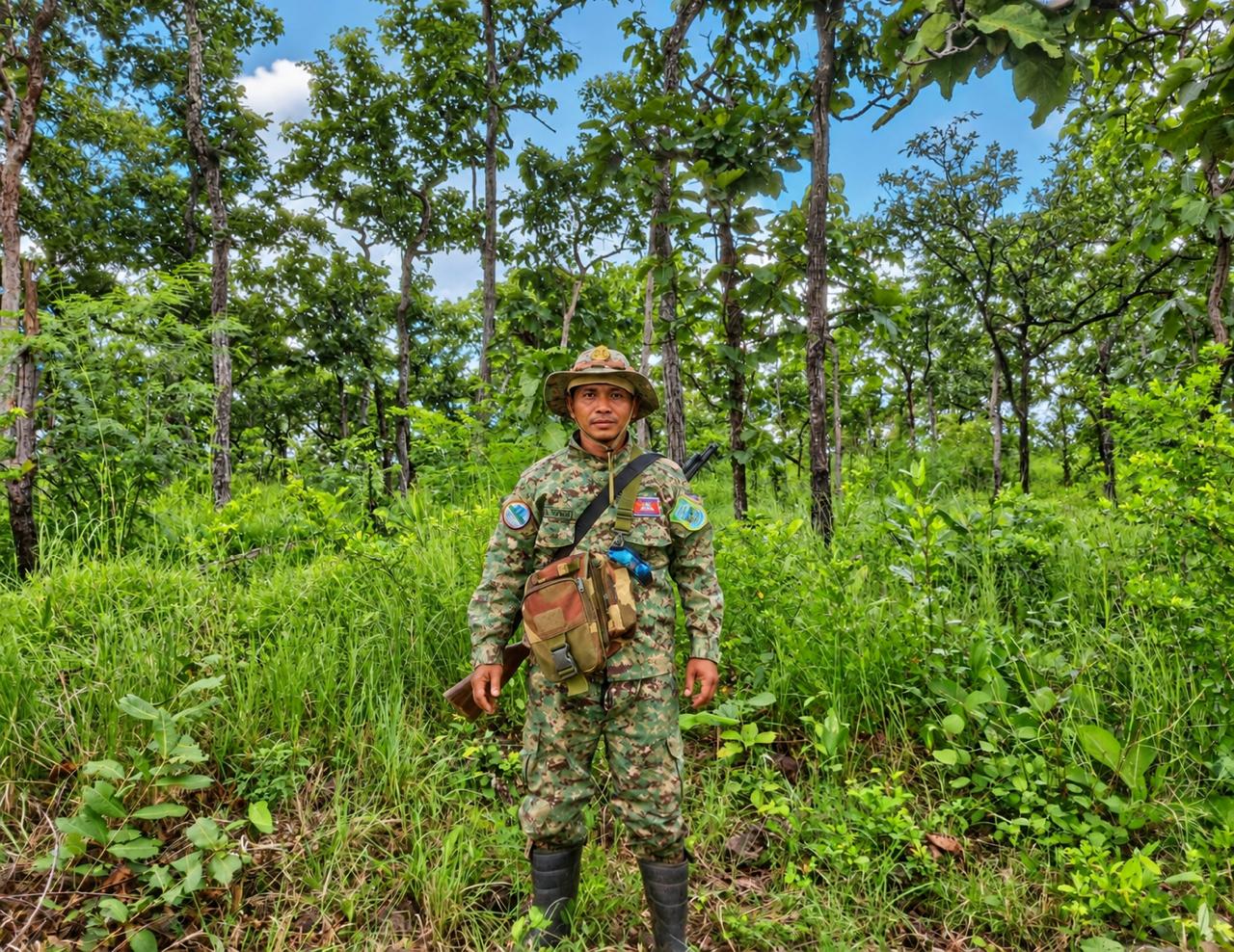
For Chhun Borin, protecting the forest is more than a job. It is a commitment to the environment, wildlife, and the people whose lives depend on natural resources.
At 37 years old, Borin has spent more than nine years protecting the forest as a park ranger in Prey Lang Wildlife Sanctuary in Preah Vihear Province, Cambodia. Since 2017, he has dedicated his work to conserving the forest and natural resources in his community, believing that a healthy forest is essential for both people and nature.
“Forest is very important for our lives. It helps protect us from droughts and floods, supports rainfall, and provides shelter for wild animals,” he explains.
For Borin, the forest is not only a home for wildlife. It is also closely connected to the livelihoods and well-being of local communities. Many people depend on natural resources for their daily needs, while farmers rely on a healthy environment to support their agricultural activities. He believes that protecting the forest today means helping to secure a better future for the next generation.
As a park ranger, Borin works to protect forest areas within the sanctuary and surrounding protected landscapes. His responsibilities include helping prevent illegal deforestation, monitoring forest areas, and raising awareness among local communities about the importance of forest conservation.
Borin’s commitment to forest conservation also extends to tree-planting activities supported by the (Building Climate Resilience of Communities in Cambodia’s Protected Landscapes: Biodiversity-Friendly Crop-Livestock Systems for Adaptation) SCALE+ project, implemented by the Ministry of Environment (MoE) in close collaboration with the Ministry of Agriculture, Forestry and Fisheries, with technical support from FAO and funding from the Global Environment Facility (GEF).
For him, planting trees is a practical way to encourage people, especially young people, to take part in protecting nature. Every tree planted represents a step towards a greener environment and a reminder that everyone has a role in conservation.
Borin’s work may not grow crops or produce food directly, but his work helps protect the natural foundation of the agri-food system. By conserving forests, raising awareness, and encouraging community participation, he contributes to a healthier environment for farmers, wildlife, and future generations.
This connection is important for the agri-food system. Healthy forests help maintain soil and water resources, support biodiversity, and strengthen the natural environment on which farming communities depend. Protecting these resources can help communities become more resilient to climate-related challenges and support more sustainable agricultural production.
On this World Food Day, Borin reminds us that protecting nature is also part of protecting our food, our livelihoods, and our future.
Source: FAO


